Arizona Voter Guide: 2026 Elections
Welcome to the definitive guide for Arizona voters in 2026! This resource provides crucial information regarding upcoming elections, registration, and vital security updates.
Recent developments include a Department of Justice lawsuit concerning voter records, alongside secretaries of state voicing data usage concerns, impacting Arizona’s electoral landscape.
Understanding Arizona’s Election System
Arizona employs a county-based election system, meaning each of the state’s fifteen counties manages its own elections under the oversight of the Arizona Secretary of State. This decentralized approach allows for localized control but necessitates standardized procedures to ensure fairness and accuracy statewide.
Voters can participate in various election types, including primary, general, and special elections, alongside votes on ballot initiatives and propositions. The primary elections narrow down candidates for each party, while the general election determines the winners. Arizona also utilizes early voting options, including mail-in ballots and in-person early voting locations, alongside traditional Election Day voting.
Currently, concerns are surfacing regarding voter information security, with a Department of Justice lawsuit seeking voter registration records and secretaries of state expressing anxieties about potential data misuse. Understanding these dynamics is crucial for informed participation in Arizona’s democratic process.
Voter Registration Requirements
To register to vote in Arizona, you must be a U.S. citizen, a resident of Arizona, and at least 18 years old by the date of the general election. You cannot be a convicted felon unless your civil rights have been restored. Registration can be completed online, by mail, or in person at county elections offices or Motor Vehicle Division (MVD) locations.
The registration form requires your name, address, date of birth, and driver’s license or state ID number. If you don’t have either, you can provide the last four digits of your Social Security number or a copy of a utility bill or bank statement. Providing accurate information is vital to avoid issues with your registration status.
Recent scrutiny surrounding voter data, including a Department of Justice lawsuit, highlights the importance of secure registration processes. Ensuring your information is correctly recorded and protected is paramount for exercising your right to vote.
Checking Your Voter Registration Status
Verifying your voter registration status is a crucial step before each election. Arizona provides a convenient online tool through the Secretary of State’s website, allowing you to confirm your registration details are accurate and up-to-date. You’ll need to provide your name, date of birth, and address to access the system.
Regularly checking your status is especially important given recent concerns about voter data security and the ongoing Department of Justice lawsuit regarding voter records. Confirming your information hasn’t been altered or removed can prevent potential issues at the polls.
If you find any discrepancies, contact your county elections office immediately to rectify the situation. Proactive verification ensures a smooth and secure voting experience, safeguarding your right to participate in Arizona’s elections.
Important Dates for 2026 Elections (as of 04/21/2026)
As of today, April 21st, 2026, Arizona voters should mark their calendars with key election dates. While 2026 isn’t a major election year statewide, several local ballot initiatives are scheduled for consideration in various parts of the state. The specific dates for these initiatives will vary by jurisdiction.
Primary Election: Dates will be determined by county, typically occurring in late July or early August. Check your county elections office website for precise dates. General Election: November 3rd, 2026, is the anticipated date for the general election, though this is subject to official confirmation.

Voter Registration Deadlines: Typically 30 days before each election. Stay informed through the Arizona Secretary of State’s website for the most current and accurate information regarding deadlines and any potential changes.
Types of Elections in Arizona
Arizona hosts a variety of election types to ensure comprehensive representation. General Elections, held every two years, determine state and federal officials, offering voters the broadest range of choices. Primary Elections precede the general election, allowing voters affiliated with political parties to select their nominees for each office. These are crucial for shaping the general election ballot.
Beyond these regular cycles, Special Elections are called to fill unexpected vacancies in office, while Ballot Initiatives and Propositions allow citizens to directly propose and vote on laws and constitutional amendments. Several ballot initiatives are already anticipated in parts of Arizona for 2026, addressing local concerns and policy changes. Understanding each election type is vital for informed participation.
Primary Elections
Arizona’s Primary Elections are pivotal events where voters registered with a political party choose their candidates for the subsequent General Election. These elections significantly shape the options available to voters in November. Participation is restricted to those registered as members of recognized political parties – typically Republican, Democrat, Green, and Libertarian – though independent voters may participate in some primaries.
The primary election process allows parties to refine their platforms and select nominees best representing their ideologies. Arizona utilizes a closed primary system, meaning only registered party members can vote in that party’s primary. Understanding your party affiliation and the primary election timeline is crucial for influencing the candidate selection process and ensuring your voice is heard early in the electoral cycle.
General Elections
Arizona’s General Elections represent the culmination of the electoral process, occurring after the primary elections. These elections determine who will hold office at the state and federal levels, including Governor, Senators, Representatives, and various county and local positions. Unlike primaries, General Elections are open to all registered Arizona voters, regardless of party affiliation.
The General Election provides voters with a direct choice between candidates nominated by different political parties, as well as any independent or write-in candidates. Voter turnout is typically highest during General Elections due to the broader range of offices and the significant impact these elections have on policy and governance. Informed participation in the General Election is vital for shaping Arizona’s future and ensuring responsive representation.
Special Elections & Ballot Initiatives
Arizona’s electoral process extends beyond regularly scheduled primary and general elections to include Special Elections and Ballot Initiatives. Special Elections are called to fill unexpected vacancies in office, arising from resignations, deaths, or other circumstances. These elections often have unique timelines and specific eligibility requirements, differing from standard election cycles.
Ballot Initiatives allow citizens to directly propose and vote on laws and constitutional amendments. In 2026, even though it isn’t a major election year, Arizona voters in certain areas will be deciding on several ballot initiatives impacting their communities. These initiatives cover a wide range of topics, offering voters a direct voice in shaping state policy. Understanding the details of these initiatives is crucial for informed civic engagement and responsible voting.
Key Races to Watch in 2026
While specific candidate fields are still developing as of April 21, 2026, several races in Arizona are anticipated to be highly competitive and attract significant attention. The U.S. Senate seat currently held by [incumbent’s name] will be a focal point, drawing national scrutiny and substantial campaign spending. Competitive House of Representatives races in key districts, particularly those with shifting demographics, are also expected.
Down-ballot races, including those for state legislative seats and county-level offices, will also be crucial in determining the future direction of Arizona’s policies. These races often have a direct impact on local communities and are vital for addressing specific regional concerns. Monitoring candidate platforms, fundraising efforts, and public endorsements will be essential for voters seeking to make informed decisions in these pivotal contests.
Ballot Initiatives and Propositions
Arizona voters will face a number of ballot initiatives in 2026, even outside of major election years, impacting various aspects of state and local governance. These initiatives, proposed through citizen petitions and legislative referrals, cover a diverse range of topics, from education funding and healthcare access to election procedures and criminal justice reform.
Understanding the specifics of each proposition is crucial for informed voting. Detailed information, including official summaries, arguments for and against, and potential fiscal impacts, will be available through the Arizona Secretary of State’s website and county elections offices. Voters are encouraged to thoroughly research each initiative before casting their ballots, as these measures can have significant and lasting consequences for Arizona communities.
Early Voting Options
Arizona offers convenient early voting options to accommodate diverse voter schedules and preferences. These options aim to increase accessibility and reduce congestion at polling places on Election Day. Voters can choose between early voting by mail and early voting in person at designated locations within their respective counties.
Early voting by mail allows registered voters to request a ballot be mailed to their address, providing ample time to review and return it before the election. Early voting in person provides a similar opportunity, but at designated voting centers equipped with ballot tabulation machines. Details regarding locations, hours of operation, and request deadlines will be readily available through county elections offices and the Arizona Secretary of State’s website, ensuring a smooth and accessible voting experience for all eligible Arizona citizens.
Early Voting by Mail
Arizona’s Early Voting by Mail system is a cornerstone of voter accessibility, allowing registered voters to participate in elections from the convenience of their homes. To participate, voters must submit a request for an early ballot, typically available through county elections offices and the Arizona Secretary of State’s website.
Once approved, a ballot is mailed directly to the voter’s registered address. Voters carefully review their choices, complete the ballot, and return it via mail or designated drop-off locations. It’s crucial to adhere to established deadlines for both requesting and returning ballots to ensure your vote is counted. Detailed instructions and tracking options are provided to guarantee a secure and transparent process, empowering Arizona voters with a flexible and reliable voting method.
Early Voting in Person
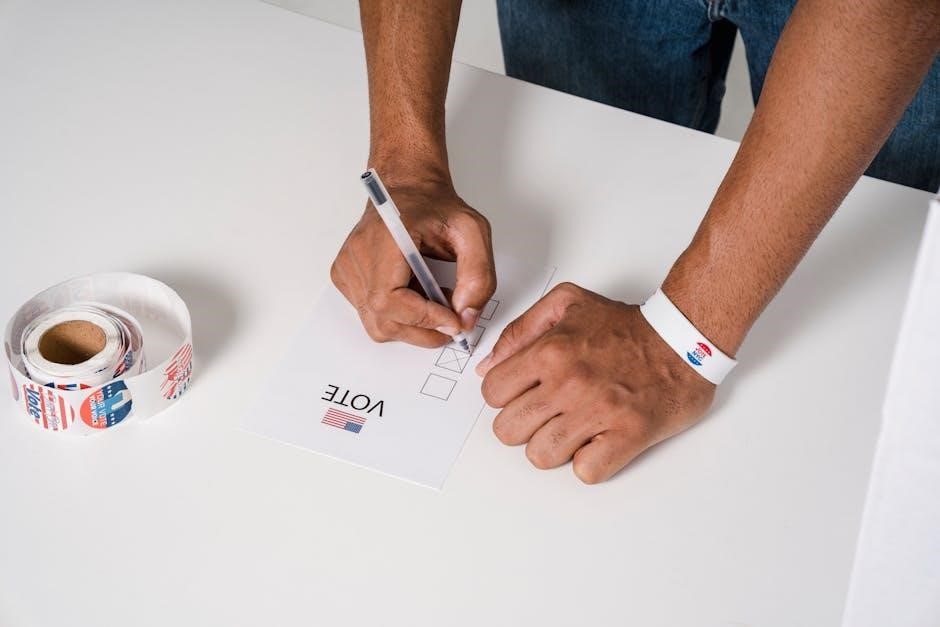
Arizona offers convenient Early Voting in Person options for those preferring a hands-on approach. Designated early voting locations, typically found at county elections offices and other accessible community sites, open several days before Election Day. This allows voters to cast their ballots during extended hours, bypassing potential lines on Election Day itself.

Voters must present valid identification when voting in person, adhering to Arizona’s voter ID requirements. These locations provide a secure and supervised environment for ballot completion and submission. County elections officials are available to assist with any questions or concerns. Early in-person voting provides a flexible alternative, ensuring all eligible Arizona citizens have ample opportunity to exercise their right to vote, contributing to a robust and inclusive democratic process.
Voting on Election Day
Election Day in Arizona provides the traditional method for casting your ballot. Polling places are open from 6:00 AM to 7:00 PM on Election Day, offering all registered voters the opportunity to participate. Finding your designated polling place is crucial; resources are available online through the Arizona Secretary of State’s website and county elections offices.
Remember to bring valid photo identification to the polling place, as required by Arizona law. Poll workers are present to assist with the voting process and ensure a smooth experience. Voters can expect to encounter fellow citizens exercising their democratic rights. While lines may form during peak hours, Election Day remains a cornerstone of the American electoral system, allowing direct participation in shaping Arizona’s future. Be prepared and informed for a successful voting experience!
Voter ID Requirements in Arizona
Arizona mandates specific identification for voters participating in elections. To cast a ballot, you must present a valid photo ID at your polling place. Acceptable forms of identification include an Arizona driver’s license, a state-issued identification card, a U.S. passport, or other government-issued photo IDs.
If you do not have a photo ID, there are alternative options. You can utilize two documents proving your address, such as a utility bill and a bank statement. However, presenting a photo ID streamlines the process significantly. It’s crucial to verify your ID is current and not expired. Understanding these requirements beforehand ensures a smooth and efficient voting experience, safeguarding your right to participate in Arizona’s democratic process. Always be prepared and informed about the necessary documentation.
Accessibility for Voters with Disabilities
Arizona is committed to ensuring all eligible voters, including those with disabilities, have equal access to the electoral process. Polling locations are required to be accessible, adhering to the Americans with Disabilities Act (ADA) standards. This includes ramps, accessible parking, and voting machines designed for individuals with various needs.
Voters requiring assistance can bring a person of their choice to help them cast their ballot, excluding their employer or union representative. Accessible voting machines offer features like audio ballots and tactile keypads. Additionally, Arizona allows for permanent early voting by mail, providing a convenient option for those who prefer to vote from home. Contact your county elections office to learn about specific accessibility features available in your area and to request any necessary accommodations.
Concerns Regarding Voter Information Security
Recent events have highlighted significant concerns surrounding the security of Arizona voter information. Ten secretaries of state have jointly expressed apprehension to the Department of Justice and Department of Homeland Security regarding the intended use of voter data submitted under recent requests. These concerns center on potential misuse and the safeguarding of sensitive personal details.
Simultaneously, the U.S. Justice Department has initiated a lawsuit against Arizona, seeking access to voter registration records. Arizona’s Secretary of State maintains that both state and federal laws prohibit the disclosure of this information. These developments underscore the ongoing tension between federal requests for data and states’ obligations to protect voter privacy, raising critical questions about data security and responsible information handling within the electoral system.

Department of Justice Lawsuit Regarding Voter Records
The U.S. Department of Justice has filed a lawsuit against the state of Arizona, specifically targeting access to its voter registration records. This legal action seeks to compel Arizona to provide voter information, a request that has sparked considerable debate and legal challenges. The DOJ argues its access is necessary for enforcing federal voting rights laws, particularly concerning potential discrimination and ensuring equitable access to the ballot box for all citizens.
However, Arizona’s Secretary of State firmly opposes the request, citing both state and federal laws designed to protect the confidentiality of voter information. The state contends that releasing such data would violate privacy protections and potentially compromise the integrity of the electoral process. This lawsuit represents a significant clash between federal authority and state sovereignty regarding voter data access and control, with implications extending beyond Arizona’s borders.
Secretaries of State Concerns about Data Usage
A coalition of ten state secretaries of state have jointly expressed serious concerns to both the Department of Justice and the Department of Homeland Security regarding the intended use of voter information recently requested from them. This unified front highlights a growing apprehension about potential misuse of sensitive voter data, raising questions about privacy and security implications.
The secretaries are particularly worried about how the collected information will be utilized, fearing it could be exploited for purposes beyond legitimate voting rights enforcement. They emphasize the need for transparency and clear guidelines regarding data handling, storage, and access controls. This letter underscores a broader national conversation about balancing federal oversight with state control over voter information and safeguarding the integrity of the electoral system against potential vulnerabilities.
Resources for Arizona Voters
Arizona voters have access to a wealth of resources designed to ensure a smooth and informed electoral experience. The Arizona Secretary of State website (azsos.gov) serves as a central hub for comprehensive election information, including voter registration details, candidate lists, and ballot initiative explanations. It’s a vital starting point for all your voting needs.
Furthermore, each of Arizona’s fifteen counties maintains its own elections office, offering localized support and services. These County Elections Offices provide details on polling locations, early voting options specific to your area, and assistance with voter registration updates. Contact information for each county office is readily available online. Utilizing these resources empowers voters to participate fully and confidently in Arizona’s democratic process.
Arizona Secretary of State Website
The Arizona Secretary of State’s website (azsos.gov) is the premier online destination for all things related to Arizona elections. It functions as a comprehensive portal, offering a user-friendly interface to navigate the complexities of the voting process. Here, you can verify your voter registration status, locate your assigned polling place, and access sample ballots.
Beyond basic information, the website provides detailed explanations of upcoming ballot initiatives and propositions, empowering voters to make informed decisions. It also features crucial updates regarding election laws and procedures, ensuring citizens remain compliant. The site is regularly updated with official announcements and responses to frequently asked questions, making it an invaluable resource for every Arizona voter seeking accurate and reliable election information.
County Elections Offices
Arizona’s county elections offices serve as vital local hubs for voter services, complementing the resources offered by the Secretary of State. Each county – including Maricopa, Pima, and others – maintains its own elections department, providing personalized assistance to residents within their jurisdiction.
These offices offer a range of services, such as in-person voter registration, early ballot request assistance, and detailed information about local races and ballot measures. They are also key points of contact for addressing specific voting concerns or resolving registration issues. Contacting your county elections office directly can provide tailored support and ensure a smooth voting experience. Find contact information and locations on the Arizona Secretary of State’s website for convenient access to local election expertise.
Understanding Ranked Choice Voting (If Applicable)
Ranked Choice Voting (RCV) is a system where voters rank candidates in order of preference, rather than selecting only one. If a candidate receives a majority of first-choice votes, they win. However, if no candidate reaches a majority, the candidate with the fewest first-choice votes is eliminated.
The votes of those who selected the eliminated candidate are then redistributed to their next-ranked choice. This process continues until a candidate secures a majority. Currently, RCV is not universally implemented across Arizona, but some municipalities or specific elections may utilize this method. Voters in those areas should familiarize themselves with the specific instructions for ranking candidates on their ballots. Understanding RCV ensures your voice is fully represented, even if your top choice isn’t initially successful.
Navigating Potential Disinformation
The spread of misinformation poses a significant threat to the integrity of elections. Be vigilant about the sources of your information regarding candidates, ballot initiatives, and election procedures. Rely on official sources like the Arizona Secretary of State’s website and county elections offices for accurate details.
Be wary of social media posts, unverified websites, and forwarded messages claiming to offer election information. Cross-reference information with multiple reputable sources before sharing it. Look for signs of bias or sensationalism. Fact-checking websites can help debunk false claims. Report suspicious activity or disinformation to election officials. Protecting the accuracy of information is crucial for informed participation and a fair election process in Arizona.
Voter Protection and Rights
Every eligible Arizona voter has the right to a fair and accessible election experience. You have the right to cast a ballot without intimidation or harassment. Poll workers are obligated to treat all voters with respect and provide assistance when needed. If you experience any issues preventing you from exercising your right to vote, such as improper questioning or equipment malfunctions, report it immediately to a poll worker or election official.

Organizations offer assistance to voters facing challenges. Know your rights regarding provisional ballots, voter ID requirements, and accessibility accommodations. If you witness voter suppression or intimidation, document the incident and report it to the appropriate authorities. Protecting voter rights is essential for maintaining a democratic process and ensuring every voice is heard in Arizona’s elections.
Reporting Voting Issues or Concerns
Arizona voters encountering problems during the election process have several avenues for reporting issues. First, address the concern directly with a poll worker or the election official present at your voting location. Document the issue with details like time, location, and a description of what occurred.
For more serious concerns, or if on-site resolution is insufficient, contact your County Elections Office immediately. The Arizona Secretary of State’s office also provides a reporting mechanism for statewide issues. Be prepared to provide your name, contact information, and a clear explanation of the problem. Prompt reporting helps ensure a fair and accurate election for all Arizona voters, and allows officials to address potential systemic issues quickly and effectively.
Finding Your Polling Place
Locating your designated polling place is a crucial step before heading to vote on Election Day. The most reliable method is utilizing the Arizona Secretary of State’s online Polling Place Locator tool, available on their official website. Simply enter your address, and the system will display your assigned polling location, along with a map and directions.
Alternatively, your county elections office website also provides polling place information. Confirm your location before election day, as assignments can change. Remember to check for any last-minute updates or changes announced by local news or election officials. Knowing your polling place in advance ensures a smooth and efficient voting experience, contributing to a well-run election process for all Arizona citizens.
Understanding Campaign Finance in Arizona
Arizona’s campaign finance laws regulate how money is raised and spent in political campaigns. These regulations aim to promote transparency and prevent undue influence. Key aspects include disclosure requirements for contributions and expenditures, limitations on certain types of donations, and rules regarding political committees.
Candidates and committees must report contributions received and expenses incurred to the Arizona Secretary of State’s office. This information is publicly accessible, allowing voters to see who is funding campaigns. Understanding these financial flows can provide valuable insights into potential biases or influences. Resources for exploring campaign finance data are available on the Secretary of State’s website, empowering informed voting decisions and fostering a more accountable political system within Arizona.